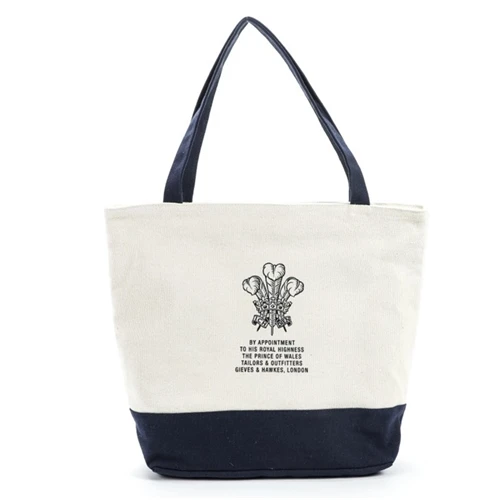
Tote bag is a soft carrier with three layers-a shell, foam core and food contact lining-around a cavity, which is closed with a zip, flap or roller top and carries ice or gel packs inside as a source of cold. No chills. It buys time by slowing down the heat's three paths to food: through walls and any hardware that passes through it, convection through openings, and radiation through gaps in the air. The cold itself comes from a phase transition, so packaging quality sets the time available and closing quality determines how much of the budget is thrown away.
It's a cooler, not a cooler
Whatever the style, Cotton Insulated Tote are defined by three structural facts. Its cold source moved with it, not on board. It's soft, so the insulation is measured in millimetres and folds, which push seams and hardware through the thermal cladding. And it opens during use, not closes, so closing is far more frequent than a static box can see.
There is no compressor or thermostat, so the cavity had no fixed point; it drifts to room temperature along a curve shaped by mass. It's not a vacuum flask, it's insulated by removing the gas around the payload and works best on liquids in an airtight container. The useful question is never how cold the bag is, but how many hours it can hold your actual load at a safe temperature.

"Three Way Heat," The Great Wall;
The thickness of the walls has attracted attention, but there are three mechanisms that share the load, and their proportions are not the same.
| Route | What drives it | Strongest lever | How to curb it |
|---|---|---|---|
| C. Induction | Temperature difference on solid surfaces | Envelope conductance, U × A | Core is better or thicker, metal crossings is less and weld is more |
| Convection | Density and pressure difference push air through openings | Leak area, not wall area | Sealed closures, shorter openings, no load beyond the seal line |
| Radiation | Sight exchange between surfaces at different temperatures | Emission on cold surfaces | A low-emissivity reflective layer Faces Real air gap |
The first line is the one the buyer compares and the only one directly measured: steady-state conductivity and resistance from a heat flow meter under ASTM C518 or ISO 8301 at a stated mean temperature. The second row was the deciding factor. Air is a cheap energy carrier-indoor air at 25 °C is close to 1.18 kg/m3, while air falling out of refrigerated bags is close to 1.29 kg / m3, a difference of about 9 per cent, enough to drive continuous exchange when there is a pathway. The third line only appeared when there was a gap.
Cold comes from phase transition, not cold
The ice in the bag is stored as latent heat. Melting mechanism is that the ice absorbs energy at almost constant 0 degrees Celsius, so a bag full of ice walks on a flat plateau and only climbs when the ice melts. Gel packs uses the same technique, but they are often designed to change phase states several degrees below zero, making each kilogram of gel packaging cooler than water and storing less energy. It is an honest trade - colder food on shorter plateaus.
Then there are two habits. Matches opening length-the zipper wraps around three sides of the bag, providing three times the swap area of a straight lid. Keep the payload below the closure line because a bag full of food cannot be flattened and the lid on food is a lidded opening.
The Food Inside Is Part of the Cooling System
The payload is not passengers, but a second reservoir. Most foods are mainly water, with Kelvin having a water content of about 4.18 kJ per kilogram, while cooked foods typically range from 3.0 to 3.9 kJ. A kilogram of food that is already cold is a kilogram of food that must be heated before the cavity warms.
It reverses the instinct to travel light. Fill the bag and fill it from the fridge rather than the counter, as food entering at 5C doesn't need to be cooled inside the bag at all. Keep packaging in contact with food, rather than piling it on a wall, as contact between two cold solids is shorter than air contact.
Water flows in and out like Vapour
Water ends the working life of the Cotton Insulated Tote, which usually arrives in the form of vapour rather than spills. Humidity enters with the air in the cavity and moves to the coldest surface, the inside of the foam and the underside of the lid, where it condenses. In a room with a semi-relative humidity of 21 ° C, the dew point is about 10 °C, so there are dew points on any surface that collects water. Moderate moisture content can make a wall more heat conductive than any thickness a buyer can change, because water is an order of magnitude more heat conductive than the foam it replaces. Once inside, it stays inside: a soft bag folds up and never dries.
This mechanism is not unique to bags. According to ASTM C1728, a protective vapour retarder or insulation must be used on insulation below ambient temperature to reduce the movement of moisture to cooler surfaces, and neglecting this can lead to insulation and system inperformance. ISO 2528 measures vapour transmission through thin plate material, and the figure quoted is not a value if temperature and relative humidity are not present. There are two habits: weld panel seams instead of sutures, which leave a channel, and hang the bag up after use, because the tote bag that stays damp is less insulated than the label says.
Parts and use of each part
Five ingredients, each with a distinct failure.
| Partly | Its job | How it fails |
|---|---|---|
| Shell | Suffer abrasion, rain and load | Deal with the roots before the fabric wears out |
| Foam core | The only real heat resistance | Wet, not dry |
| Linings? | Food contact, vapour control, wipingclean surfaces | Rifts and vapours in folds |
| Shutdown | Separate the cavity from the room | If you lose the seal, it becomes a leak path |
| Hardware | Lids and cargo | Metal tension or riveting to connect insulators |
There are three entries to comment on. Linings are food contact surfaces and therefore regulated materials: olefin polymers such as polyethylene and polypropylene used in repeated food exposures are less than 21 CFR 177.1520, which sets out identification requirements, extractable limits and conditions of use, including refrigerated and frozen storage. The undeclared resin lining is an open question, not a detail. Similarly, the foam core should be determined against the requirements of ASTM D3575, rather than the term "high density foam", based on the measurement characteristics of ASTM D3575 such as density, compression deflection and water absorption. Hardware is a silent malfunction: aluminum has a thermal conductivity of about 205 W/m.K., while foam has a thermal conductivity of about 0.035, which is thousands of times faster, so a metal pull, rivet or frame runs through the wall like a small bridge, right where condensation first forms. Zippers are fasteners, not seals: EN 16732 sets performance levels for slide fasteners, excluding pressure seal types.
Questions from buyers
How long do you keep food cold?
There is no figure for an hour, because the answer is a ratio-the amount of cold stored divided by leak rate. Leak rate are largely determined by sealing, with only part determined by the walls, so two bags have the same foam, with a two-fold difference depending on how often the lid opens and how well it seals. A sealed bag containing pre-refrigerated food covers a workday. The same bag was opened a dozen times in a steaming car and wrapped up for the morning.
Ice or plastic bags?
Ice stores more energy and costs less per kilogram. Gel packs re-freeze can be refrozen without leaking water onto the food, mold around the container and can be formulated to stay below freezing, making the food colder at the expense of shortening the altitude. For a lunch bag, exposure and leakage are often the determining factors, not the number on the label.
Can I put some hot food in there?
Not to cool. Insulation bags prevent heat loss, whereas heat loss bags have the opposite effect. Cooked foods requiring temperature control must drop from 135 degrees Fahrenheit to 70 degrees Fahrenheit in two hours, for a total of 41 degrees Fahrenheit in six hours, according to Food and Drug Administration rules 3-501.14 of the 2022 Codex Alimentarius. The range between 41 °F and 135 °F is where bacteria multiply fastest, which is why sections 3-501.16 provide for low temperatures of 41 °F or below. Put the cold vegetables in a shallow pan, then set the plate, not mixing hot and cold in an empty cavity.
The working principle of a Cotton Insulated Tote is nothing new: a wall that will withstand envelopes, a seal that will actually seal them, a travel-friendly package, a package that clings to food, something pre-cooled and a lining that will dry out. There is nothing on the shelf. One figure worth knowing is your own central temperature within six hours of lunch, which can be measured at home with a probe.
Source of information
- ASTM C518 and ISO 8301 --Steadystate heat transfer and thermal resistance of heat flow meter
- ISO 2528 --water vapour transmission rate of paper materials
- ASTM C1728 --flexible aerogel insulation, including service requirements for vapour reducers at below-ambient temperatures
- ASTM D3575 and D4819 -Test methods and material requirements for flexible cellular polyolefin foams
- EN 16732 -slide fasteners (zips), specification and performance level
- 21 CFR 177.1520 -olefin polymers for Repeated Food Exposure: Characteristics, extractable limits, Conditions of Use
- FDA Codex 2022, § 3-501.14 -Two-stage cooling of cooked food
- FDA Codex Alimentarius 2022, sections 3-501.16 -cryopreservation at 41 °F (5 °C) or below